
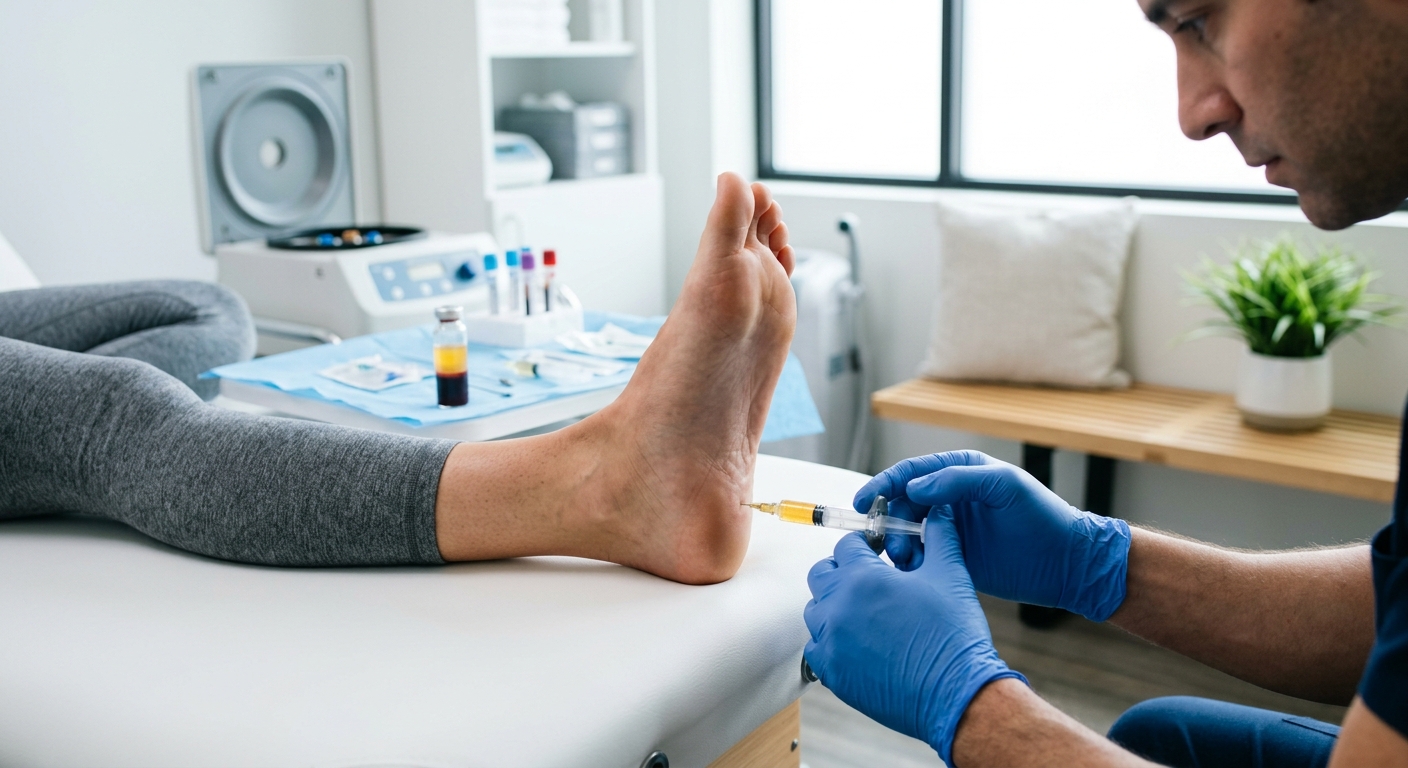
That sharp, stabbing pain in your heel when taking your first steps out of bed in the morning is a classic sign of plantar fasciitis. When conservative remedies like stretching, night splints, and custom orthotics fail to deliver lasting relief, everyday activities like walking or standing become exhausting tasks.
If you have lived with chronic heel pain for months or years, PRP therapy for plantar fasciitis offers an advanced, non-surgical solution that targets the root cause of tissue damage rather than masking the symptoms. At American Foot & Leg Specialist, our experienced podiatric team utilizes regenerative medicine to help patients return to an active, pain-free lifestyle.
How Does PRP Therapy Treat Chronic Plantar Fasciitis?
What is PRP Therapy for Plantar Fasciitis?
Platelet-Rich Plasma (PRP) therapy uses a concentrated sample of your own blood platelets to repair micro-tears in the inflamed plantar fascia tissue. Packed with growth factors, PRP stimulates collagen production, reduces local inflammation, and accelerates cellular regeneration to deliver long-term healing for chronic heel pain.
Why Conservative Treatments Fail for Chronic Heel Pain
Plantar fasciitis occurs when the thick band of tissue running across the bottom of your foot experiences repetitive stress and strain. Over time, chronic irritation can shift the condition from acute inflammation (plantar fasciitis) to tissue degeneration (plantar fasciosis).
Because degenerative tissue receives minimal blood flow, the body often struggles to repair itself naturally. Traditional options frequently fall short:
- Rest and Ice: Offer temporary relief but cannot rebuild degraded tissue.
- Cortisone Injections: Reduce immediate pain but can weaken the plantar fascia tissue or cause fat pad atrophy if used repeatedly.
- Pain Medications: Cover up discomfort without resolving underlying cellular damage.
PRP injections bypass these limitations by delivering a direct concentration of natural healing factors directly to the damaged site.
The Benefits of PRP Therapy for Foot & Heel Pain
Platelet-rich plasma leverages your body’s natural healing mechanisms to repair ligament and tendon tissue.
- Non-Surgical & Minimally Invasive: Performed in-office within 45 to 60 minutes with no hospital stay required.
- Addresses Root Cause: Rebuilds tissue fibers rather than temporarily masking pain signals.
- Low Risk of Side Effects: Because the injection is derived from your own blood, the risk of allergic reaction or tissue rejection is practically zero.
- Durable, Long-Term Relief: Many patients experience sustained pain reduction and improved mobility that lasts for years.
Comparing Your Heel Pain Treatment Options
When deciding between conservative care, steroid injections, surgery, and regenerative medicine, understanding the differences is key:
| Treatment Type | Recovery Time | Mechanism | Risk Profile | Long-Term Success Rate |
| Cortisone Shots | Immediate (1–2 days) | Suppresses local inflammation | Risk of tissue weakening over time | Low for chronic cases |
| PRP Therapy | Progressive (2–6 weeks) | Rebuilds tissue using growth factors | Very low (uses blood plasma) | High for chronic tissue |
| Plantar Fascia Surgery | Extended (6–12 weeks) | Cuts or releases the plantar ligament | Surgical risk, nerve irritation, downtime | Moderate to high (requires recovery) |
What to Expect During Your PRP Procedure
Understanding the step-by-step process helps ease any anxiety before your appointment at American Foot & Leg Specialist:
- Blood Draw: A small sample of blood is drawn from your arm, similar to a routine lab test.
- Centrifugation: The blood sample is placed in a high-speed centrifuge to isolate the platelet-rich plasma from other blood components.
- Targeted Injections: Using local numbing and precision guidance, your specialist injects the concentrated plasma directly into the damaged area of your plantar fascia.
- Post-Procedure Care: You will be able to walk out of the clinic the same day. Your provider may recommend a brief period of modified activity or wearing a supportive boot to protect the foot as healing begins.
Are You an Ideal Candidate for PRP Foot Injections?
You may be a great candidate for PRP therapy if you:
- Have suffered from severe heel pain for more than 6 months.
- Have tried orthotics, physical therapy, and cortisone shots without lasting improvement.
- Prefer a non-surgical solution with minimal downtime.
- Want to avoid the risks and lengthy recovery associated with invasive foot surgery.
Take the First Step Toward Pain-Free Walking
You don’t have to live with chronic heel pain or let plantar fasciitis keep you off your feet. The podiatric specialists at American Foot & Leg Specialist are dedicated to bringing advanced regenerative treatments to patients throughout Georgia.
Ready to find out if PRP therapy is right for you?
Contact American Foot & Leg Specialist today to schedule a consultation with our experienced foot and ankle team.