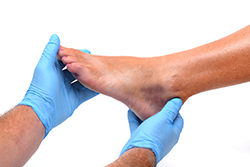

Your feet carry you through decades of walking, standing, and staying active — so it’s no surprise that they change over time, just like the rest of the body. For many adults, these changes happen gradually enough to go unnoticed until they start affecting daily comfort or mobility. Knowing what’s normal aging versus what deserves a closer look can help you stay active and pain-free for years to come.
How Feet Change as You Age
As we get older, several natural shifts occur in the structure and function of the feet:
- Loss of fatty padding, which cushions the bottom of the foot and absorbs shock with every step
- Thinning skin, making feet more prone to dryness, cracking, and slower healing
- Reduced circulation, which can affect how quickly injuries heal and how feet respond to temperature
- Weakening arches, sometimes leading to flatter feet or new arch pain
- Stiffer joints and tendons, which can limit flexibility and increase the risk of strains
Individually, these changes are common. Together, they can make feet more vulnerable to pain, injury, and slower recovery — which is why proactive care becomes more important with age.
Common Age-Related Foot Concerns
- Arthritis, causing stiffness, swelling, or pain in the foot and ankle joints
- Reduced sensation, especially for those with diabetes, which can mask injuries until they become serious
- Balance changes, tied to weaker foot muscles and altered gait, increasing fall risk
- Thickened or fungal toenails, which become more common and harder to manage over time
- Bunions and hammertoes, which often worsen gradually and can affect shoe fit and comfort
When to See a Podiatrist
Not every ache is a cause for concern, but certain signs are worth having evaluated:
- Persistent pain that doesn’t improve with rest
- Numbness, tingling, or reduced sensation in the feet
- Wounds or sores that are slow to heal
- Noticeable changes in balance or walking pattern
- Changes in foot shape, swelling, or skin color
Staying Ahead of the Changes
The good news is that many age-related foot issues respond well to proactive care. Supportive footwear, routine check-ups, custom orthotics, and simple daily foot checks can go a long way toward preventing small issues from becoming bigger problems. This is especially true for older adults managing diabetes or circulation issues, where regular podiatric care plays a key role in preventing complications.
Aging feet don’t have to mean slowing down. With the right care and attention, most adults can stay comfortable, mobile, and active well into their senior years. If you’ve noticed changes in your feet or want a baseline evaluation, our team at American Foot & Leg Specialists is here to help you stay a step ahead.
American Foot & Leg Specialists | 404-363-9944 | Schedule an Appointment